
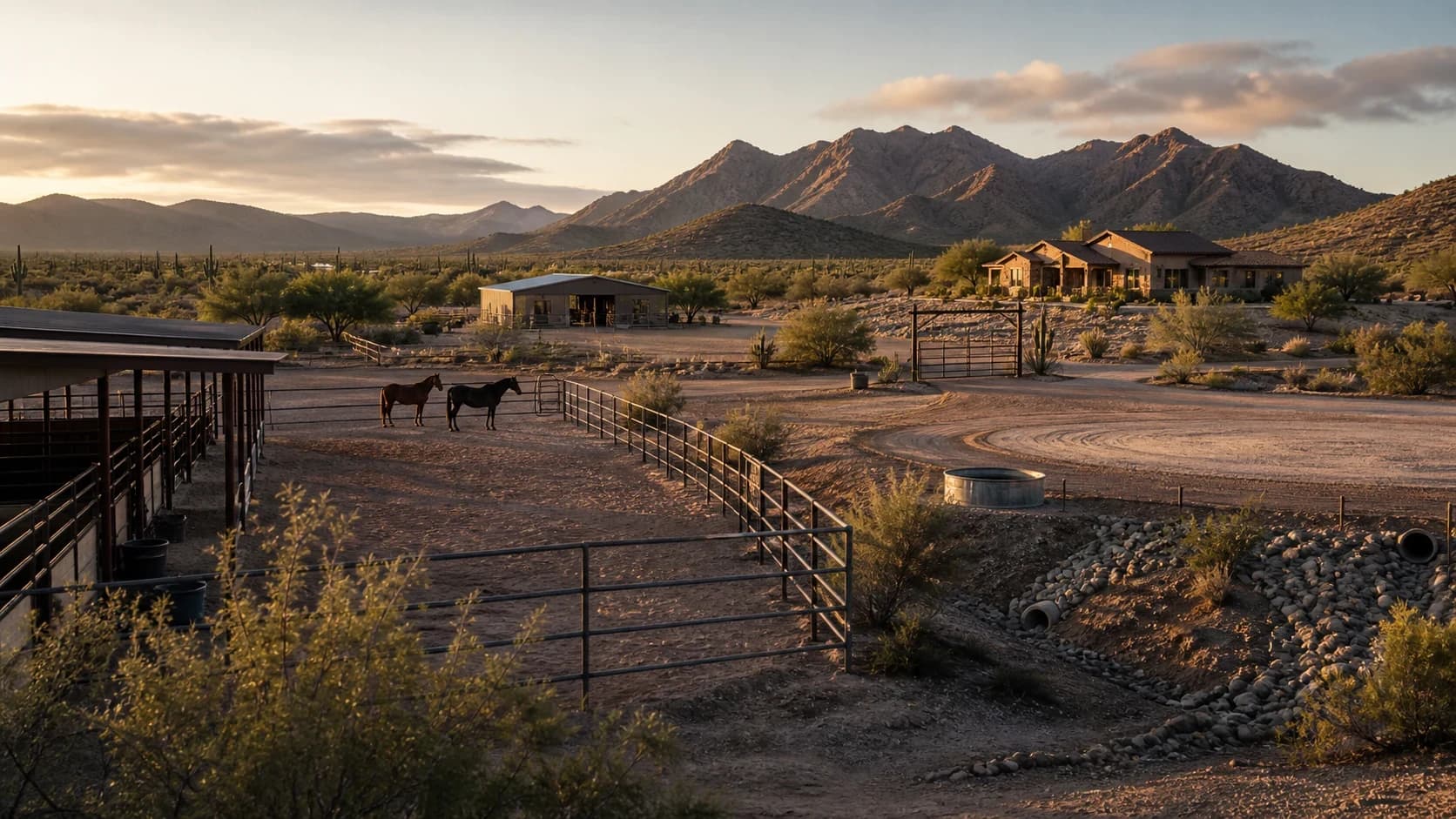
Does a regular homeowners policy cover horses and barns?
Do not assume it does. Ask your insurance agent, in writing, how the policy treats each of these:
Get the quote before your inspection period ends. A property that only works with a separate farm, ranch, or equine policy is still workable, but you want that cost in your first-year budget, not discovered after closing.
- Detached structures such as barns, hay storage, tack rooms, shade ramadas, and arena lighting
- Fencing, gates, and corrals
- Liability if your own horse injures a visitor or gets loose onto a road
- Liability if a guest rides your horse
- Any exclusion for livestock, animals, or business activity
What changes if I board other people's horses?
Boarding, lessons, training, or renting out stalls can move you from personal use into business use. Ask your agent whether that needs a separate commercial or care, custody, and control coverage, and ask how the policy defines business pursuits.
Also check the use rules. Our guide on whether you can keep horses on the parcel covers zoning and CC&Rs. Boarding for pay can trigger rules that personal horse keeping does not.
What does Arizona's equine liability law cover?
Arizona has a specific statute, A.R.S. 12-553. In plain terms:
The statute defines equine as a horse, pony, mule, donkey, or ass, and it defines what a release must acknowledge. Read the full text at azleg.gov and ask an Arizona attorney to review any release form you plan to use.
- An equine owner (or the owner's agent) who lets another person take control of a horse is not liable for that person's injury or death when the person has taken control of the horse, has signed a release (a parent or guardian signs for anyone under 18), the tack was properly installed or the rider supplied and tacked their own, and the owner matched the rider to a suitable horse based on the rider's stated skill, health, and experience.
- Owners, lessors, or agents of riding stables, boarding or training stables, rodeo grounds, or other private property used by a rider or handler are generally not liable for injury to the horse or the rider.
- Neither protection applies to gross negligence or willful, wanton, or intentional acts. The property protection also does not apply when the owner knows or should know of a hazardous condition and fails to disclose it.
What should buyers ask the seller about liability history?
Ask, and get the answers in writing:
The hazardous-condition question matters because of how the statute works. Once you own the property, known hazards you fail to disclose can affect your protection.
- Has anyone been hurt on the property while riding, handling, or visiting horses?
- Have there been insurance claims on the home, barn, or fencing? The ADRE Buyer Advisory points buyers toward claims history and insurability checks early.
- Was the property used for boarding, lessons, or events, and under what agreements?
- Are there known hazards, such as wash crossings, loose footing, low wires, or damaged fence lines, that a rider or handler should be told about?
What should sellers prepare before listing horse property in 85749?
Sellers do better when the buyer's insurance agent gets clean answers fast. Gather:
A buyer who can bind coverage quickly is a buyer who stays in escrow.
- A simple site sketch of barns, arena, turnout, and water lines (see usable land is not the acreage number)
- Permit records for barns and covered structures, if you have them
- Any boarding or lesson agreements and release forms you used
- Your current insurer's name for the buyer's agent to reference, without sharing your private policy details
How do I fit insurance into the bigger 85749 due diligence plan?
Insurance is one line in the full checklist. Pair it with our horse property due diligence guide, well and water records, and flood and wash access. Then decide with real numbers.
When you are ready, book an 85749 Decision Session or request a Property Review. You can also reach Lopez & Lopez, REALTORS® at mlslistings.app/contact or (520) 462-6023.
Questions buyers and sellers ask
What insurance and liability questions matter on 85749 horse property?
Before you buy or list horse property in 85749, find out three things: whether a standard homeowners policy will actually cover the barn, arena, and horse use you plan, whether anyone other than you will ride, board, or train on the land, and what Arizona's equine liability law does and does not protect. The answers can change your insurance cost, your paperwork, and sometimes whether the property fits your plan at all.
Does a regular homeowners policy cover horses and barns?
Do not assume it does. Ask your insurance agent, in writing, how the policy treats each of these:
What changes if I board other people's horses?
Boarding, lessons, training, or renting out stalls can move you from personal use into business use. Ask your agent whether that needs a separate commercial or care, custody, and control coverage, and ask how the policy defines business pursuits.
What does Arizona's equine liability law cover?
Arizona has a specific statute, A.R.S. 12-553. In plain terms:
Test what insurance and liability questions matter on 85749 horse property? against the actual parcel.
A listing label is not proof. Pair the record with field observation and qualified review.
- 01Read the recordCollect parcel, water, access, restriction, utility, and permit sources.
- 02Walk the operationObserve circulation, drainage, shade, fencing, facilities, and usable ground.
- 03Ask the specialistsSend each technical question to the responsible authority or qualified professional.
- 04Write the property planTie the findings to due diligence, timing, cost, and the intended horse use.
This guide is general education, reviewed October 23, 2026, using the public sources listed below. It does not give legal, tax, insurance, lending, or engineering advice. Confirm every rule and figure for your own property with the agency, lender, or licensed professional who owns it.
LimitsRules, forms, and agency pages change. Nothing here guarantees an approval, price, timeline, or outcome for a specific property.