
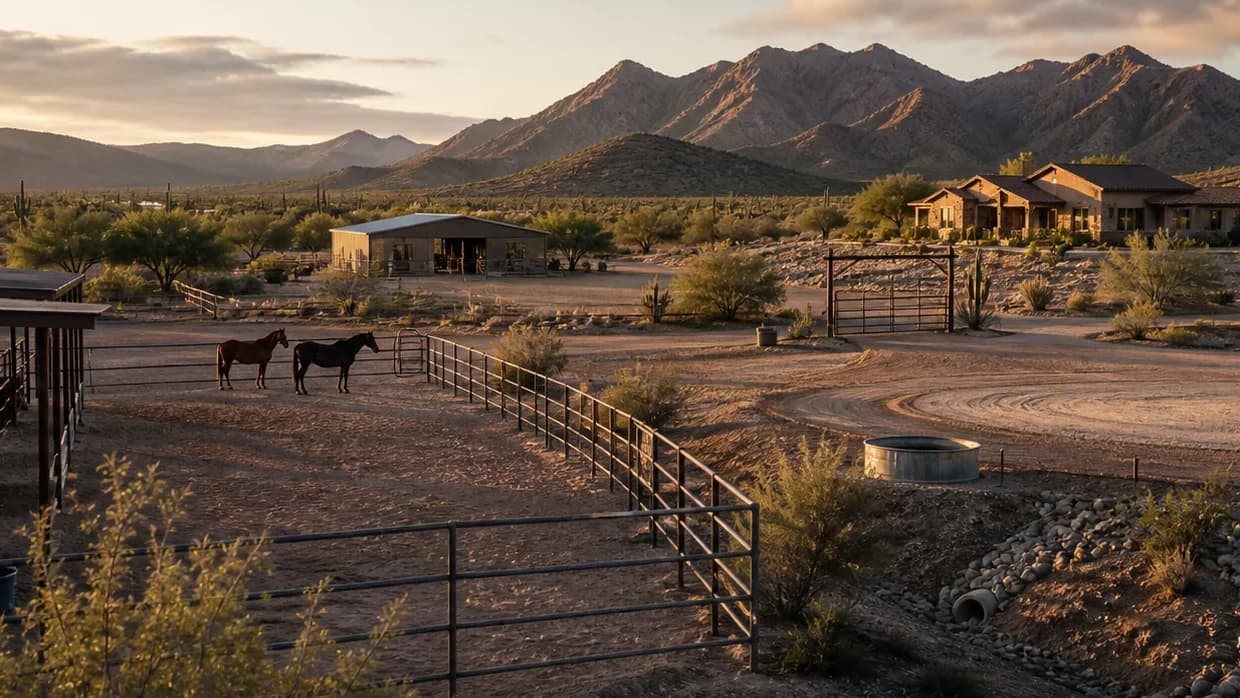
What makes an 85749 horse property harder to sell than a typical Tucson house?
A typical Tucson house is often underwritten as a dwelling, lot, and nearby context. An 85749 horse property is underwritten as a dwelling plus an operation. The buyer is asking whether the land, water, access, and facilities can carry the intended horse use after closing.
85749 sits on the Catalina Foothills and Tanque Verde edge of Tucson, where larger lots, washes, hillside driveways, and private wells show up more often than in a typical in-town tract. That is geography, not a value claim. It means more of the file lives outside the house.
A listing photo of an arena, a barn, or open ground does not prove the use is allowed, the improvement is permitted, the water can support the plan, or the ground is usable as drawn. Buyers who write on horse property usually pause for those answers. Sellers who wait until the inspection period to gather the file invite renegotiation or a walk.
Compare current Active and Coming Soon homes on https://mlslistings.app/listings. For nearby neighborhood context, read https://mlslistings.app/areas/catalina-foothills. Neither page replaces a parcel file. When you want a property-specific seller plan, start a Horse Property Decision Session on https://85749.net/ or write the team at https://mlslistings.app/contact.
- Jurisdiction and base zoning, plus overlays that may further limit animals, barns, or arenas.
- Current private restrictions, association rules, and recorded easements that cut through turnout or access.
- Water source, well or shared-well records, and septic or sewer capacity for the house plus any barn fixtures.
- Access that can take a trailer, a feed truck, and emergency movement, including wash crossings after rain.
Which improvements actually move an 85749 acreage offer, and which do not?
Improvements move an offer when a buyer can verify them and when they serve the operation the buyer can actually run. Paint, staging, and a remodeled kitchen do not answer horse-use questions. Records, access, water, fencing, and drainage often do.
These usually help a serious horse buyer stay in the file:
- A current survey or a clear boundary exhibit that matches how the land is used.
- Well, water, and septic records a buyer-selected professional can read.
- Permit history for barns, arenas, electrical work, grading, and walls.
- Fencing, gates, and circulation that match daily care, not only a photo angle.
- Drainage and footing that keep arenas, paddocks, and the driveway usable.
These usually do not: calling the listing a horse property without use, water, and access files; pricing a hobby arena or barn as if it were income or guaranteed extra value; new finish work that hides unanswered land, water, or permit questions; and improvements that sit in a wash, easement, or setback the survey already shows.
Fair housing stays simple. Describe the property, the records, and the intended use. Do not write buyer-profile copy, school-quality claims, or who should live here. If an improvement is not in the record, keep it in the seller-statement lane until a qualified professional answers it.
How should I price land, arena, and outbuildings so the MLS story matches the survey?
Price is a story the listing, the survey, and the appraisal have to survive. Start with the legal description and the mapped parcel. Pima County's regional parcel layer is a screening tool. Its own metadata says mapped values are not a substitute for a survey. If acreage, boundaries, or improvement locations will appear in remarks, get the survey or licensed exhibit first.
Write land, house, and facilities as separate facts. Gross acreage is not usable acreage. An arena is not extra land. A barn is not automatically a dollar-for-dollar add. Ask the appraiser and the listing file to see the same footprint the buyer will walk.
MLS remarks should repeat what the survey, permits, and utility records can support. If the survey shows a wash, an easement, or a structure near a line, say that in plain language. Do not describe constrained ground as open usable pasture.
Before you go live, put the survey or parcel exhibit, well and septic records, permit history, and a short use statement in one packet. Then open https://85749.net/ and start a Horse Property Decision Session, or call (520) 462-6023. You can also reach the team at https://mlslistings.app/contact.
- Match listed acreage and improvement locations to the survey, not to a memory of how the property has been used.
- Name water and wastewater as they exist: company service, private well, shared well, septic, or sewer.
- Keep arena and outbuilding language inside permit and field facts. Age and appearance do not prove compliance.
- Leave value opinions that need an appraisal, a lender, or an insurer in those lanes.
Lopez & Lopez, REALTORS® Realtors at Long Realty Company. Equal Housing Opportunity. This guide organizes seller preparation. It does not set a list price, certify a parcel, or replace appraisal, survey, title, or legal advice.
Questions buyers and sellers ask
What makes an 85749 horse property harder to sell than a typical Tucson house?
Buyers are underwriting horse use, water, access, and usable ground in addition to the house. Photos and acreage figures do not settle those questions. The listing is harder when the file is incomplete, not because 85749 is a different kind of neighborhood story.
Which improvements actually move an 85749 acreage offer, and which do not?
Documented water, septic, access, fencing, drainage, and permitted facilities move an offer when they match the buyer's operation. Decorative house work and unverified horse-property labels usually do not. Keep each improvement in the record, seller-statement, or field-observation lane until a qualified professional answers it.
How should I price land, arena, and outbuildings so the MLS story matches the survey?
Price from the legal description and a current survey or licensed exhibit. Do not treat gross acreage as usable ground or an arena as extra land. Write MLS remarks that the survey, permits, and utility records can support. Start a Horse Property Decision Session on https://85749.net/ or call (520) 462-6023.
Test selling a horse property in 85749: what buyers diligence before they write the offer against the actual parcel.
A listing label is not proof. Pair the record with field observation and qualified review.
- 01Read the recordCollect parcel, water, access, restriction, utility, and permit sources.
- 02Walk the operationObserve circulation, drainage, shade, fencing, facilities, and usable ground.
- 03Ask the specialistsSend each technical question to the responsible authority or qualified professional.
- 04Write the property planTie the findings to due diligence, timing, cost, and the intended horse use.
This seller guide organizes the 85749 questions buyers usually open before they write: use and restrictions, water and septic, access, usable ground, improvement records, and whether MLS remarks match the survey. It points to official records and qualified review. It does not interpret a code provision, set a list price, or appraise any parcel.
LimitsThis guide is not a zoning, land use, legal, title, survey, permit, water, septic, engineering, inspection, appraisal, safety, financing, insurance, or pricing determination. Rules and records can change. The responsible jurisdiction and qualified professionals must answer parcel specific questions. No statement here is a promise about buyer demand, days on market, or sale price.
Explains parcel layer coverage, attributes, update timing, and known qualifications.
Zoning, All Jurisdictions metadataPima County Geographic Information SystemsIdentifies base zoning across jurisdictions and warns that overlay zones may also apply.
Transfer of property septic inspectionPima County Department of Environmental QualityStates the County process for qualified inspection, reporting, and transfer documents when an onsite system serves the property.
Floodplain resources for real estate professionalsPima County Regional Flood Control DistrictExplains that local floodplains, erosion hazards, and riparian habitat can extend beyond FEMA mapping.
Arizona Buyer AdvisoryArizona Department of Real EstateOrganizes documents, physical conditions, and surrounding area questions for buyers and directs buyers to qualified inspectors.