
How do I check whether the barn, arena, or casita on an 85749 property was permitted?
Start with the county record, then match it to what is actually on the ground.
- Search the permit history. Most of 85749 sits in unincorporated Pima County, so permits are generally on file with Pima County Development Services. You can search records by address or parcel on the county permit portal at permits.pima.gov. If a parcel falls inside City of Tucson limits, the City holds those records instead, so confirm the jurisdiction first.
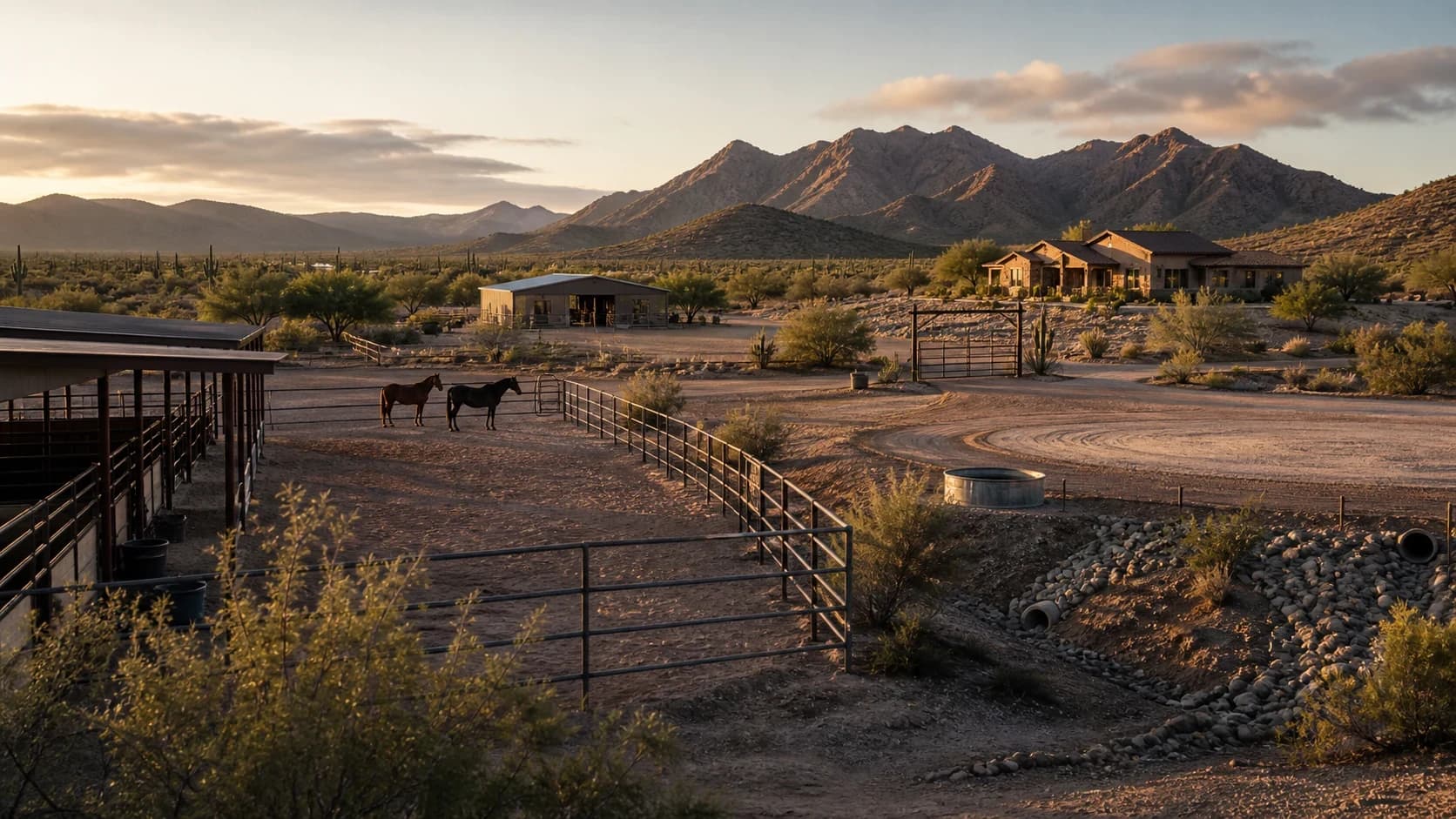
- List every structure you can see. Walk the property with the listing photos and an aerial view, and write down each barn, stall row, covered arena, workshop, guest house, and any structure with power or plumbing.
- Match the two lists. Each structure should line up with a permit and, ideally, a final inspection. A permit that was opened and never finaled is a question, not an answer.
- Ask the seller in writing. The Arizona seller property disclosure statement asks about work done without permits. Read that answer closely and ask follow-up questions in the inspection period.
Is a horse barn exempt from a building permit in Pima County?
Do not assume it is. Pima County's Do I Need a Permit? page lists agricultural buildings among the projects that need a building permit, and any exemption depends on the specific use and property. Electrical, plumbing, and septic work generally need their own permits even when the shell of a structure does not. If a seller tells you a barn "didn't need a permit," ask Development Services to confirm that for the specific parcel before you rely on it.
What about a casita or guest house?
A casita is where permit gaps matter most, because people sleep there. If the guest house has a bathroom, a kitchen, or a septic or sewer connection, check that each piece was permitted. A converted tack room or barn apartment with no permit history is a common pattern on older horse properties. It can affect how the space is valued, how it is insured, and whether you can legally rent it or use it the way you plan to.
What can an unpermitted structure mean for me as the buyer?
It depends on the structure, but the questions are the same every time:
- Safety. Was the wiring in the barn or arena lighting done to code? This is a real fire risk around hay and bedding.
- Insurance. Your insurance agent may ask about outbuildings and their condition. Pair this check with our earlier guide to horse property questions.
- Appraisal and lending. An appraiser may give little or no value to a space that is not permitted, especially living space.
- Future cost. If you later pull a permit to remodel, the county may require older work to be brought up to code first.
- Floodplain. Structures near washes can trigger a floodplain use permit. Read flood maps, washes, and access before you count on that back pasture.
How do I protect myself during escrow?
Use the inspection period. Under the standard Arizona resale contract, that window is when you investigate the property and decide whether to move forward. In practice that means:
The ADRE Buyer Advisory is a good companion list for everything else you should check.
- Pull the permit history before or right after you go under contract.
- Ask your inspector to look closely at barn and arena electrical, casita plumbing, and any structure with power.
- If something is unpermitted, decide early whether you want the seller to permit it, credit you, or simply disclose it so you can price it in.
- Get the county's answer in writing when a structure's permit status changes your offer.
What should sellers do before listing horse property in 85749?
Run the same search on your own property before a buyer does. Gather the permits you have, note any structure built without one, and decide with us whether to permit it, disclose it, or both. Clean answers keep buyers in escrow. A buyer who finds an unpermitted casita on day eight of the inspection period is a buyer who starts renegotiating.
How does this fit the bigger 85749 due diligence plan?
Permits are one line in the full checklist. Pair this with our horse property due diligence guide, can I keep horses on this parcel, and usable land is not the acreage number. Then make the decision with real information.
When you want a second set of eyes on a specific property, request a Property Review or book an 85749 Decision Session. You can also reach Lopez & Lopez, REALTORS® at mlslistings.app/contact or (520) 462-6023.
Questions buyers and sellers ask
How do I check whether a barn on an 85749 property was permitted?
Search the address or parcel on the Pima County permit portal, list every structure on the property, and match each one to a permit with a final inspection. Then ask the seller about any gaps in writing during the inspection period.
Is a horse barn exempt from a building permit in Pima County?
Do not assume so. Pima County lists agricultural buildings among projects that need a building permit, and electrical, plumbing, and septic work generally need permits of their own. Confirm with Development Services for the specific parcel.
Can I buy a horse property with an unpermitted casita?
Yes, but price it in. Unpermitted living space can affect value, insurance, lending, and future remodel permits. Decide during the inspection period whether to ask the seller to permit it, credit you, or disclose it.
Who can help me check permits on a Tucson horse property?
Lopez & Lopez, REALTORS® runs this check as part of an 85749 Property Review. Call (520) 462-6023 or use mlslistings.app/contact.
Test barns, arenas, and casitas in 85749: how to check permits before you buy against the actual parcel.
A listing label is not proof. Pair the record with field observation and qualified review.
- 01Read the recordCollect parcel, water, access, restriction, utility, and permit sources.
- 02Walk the operationObserve circulation, drainage, shade, fencing, facilities, and usable ground.
- 03Ask the specialistsSend each technical question to the responsible authority or qualified professional.
- 04Write the property planTie the findings to due diligence, timing, cost, and the intended horse use.
This guide is general education, reviewed October 23, 2026, using the public sources listed below. It does not give legal, tax, insurance, lending, or engineering advice. Confirm every rule and figure for your own property with the agency, lender, or licensed professional who owns it.
LimitsRules, forms, and agency pages change. Nothing here guarantees an approval, price, timeline, or outcome for a specific property.